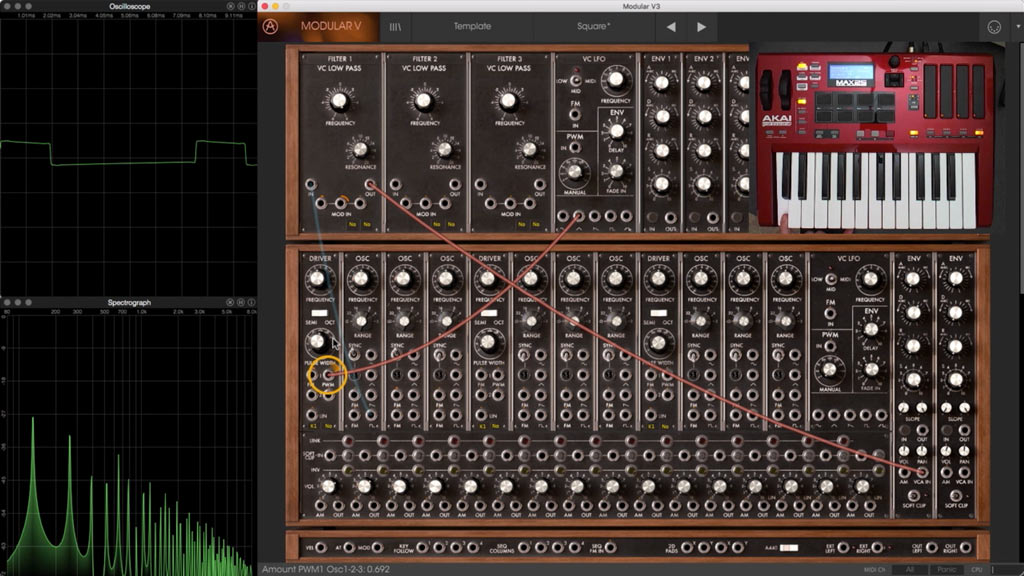
I recently released a course on Lynda.com and LinkedIn Learning on how to use the Arturia Modular V software synth, which is modeled on the old Moog modular systems. Here I show how to create a typical PWM (pulse width modulation) patch, as well as describe some of the differences in using a Moog modular or the Modular V software compared to a typical Eurorack system.
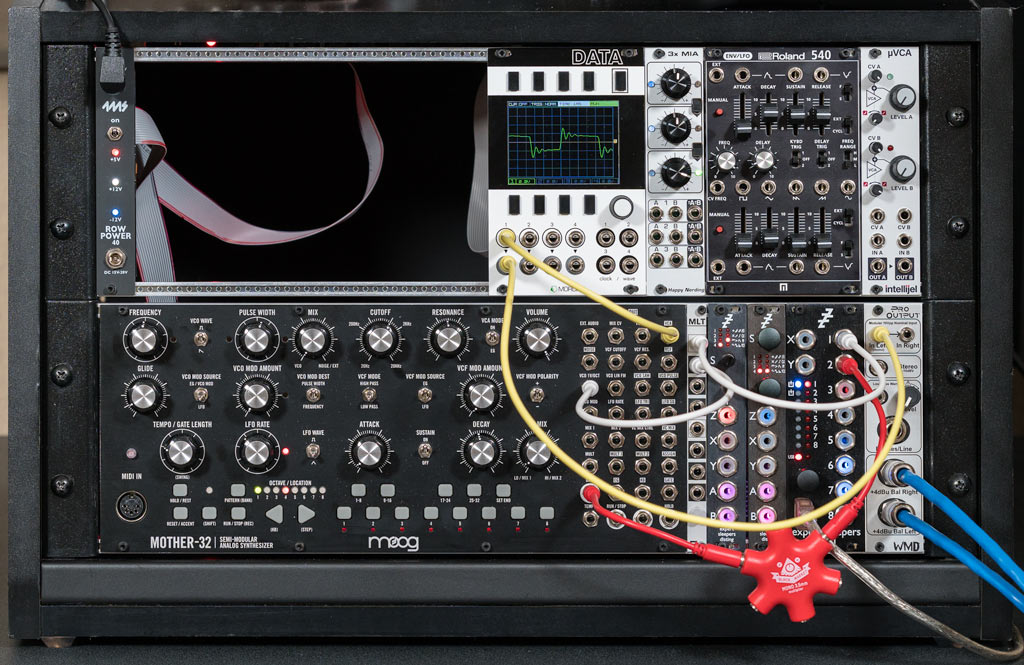
The next big “Learning Modular Synthesis” project is Eurorack Expansion. The idea behind it is that you already have a semi-modular synth or a small modular system, and now you’re wondering what to add next. As the saying goes, you need to walk before you can run. I’ve built up a core set of deceptively boring yet essential modules that will make it easier to interface your core system with the fun new modules you’re dying to try out.
Are you modular-curious? But are you a bit intimidated by the “some – okay, a lot of assembly required” nature of creating sounds from scratch on a modular synth? And do you prefer the safety of your computer screen over racks of gear with dangling patch cords and exposed power busses (at least while starting out)? For those who want to dip a toe into the modular waters without fear of it getting bit off by some unknown creature, I created a “your first patch” video as part of my Learning Modular Synthesis: Arturia Modular V course on Lynda.com.
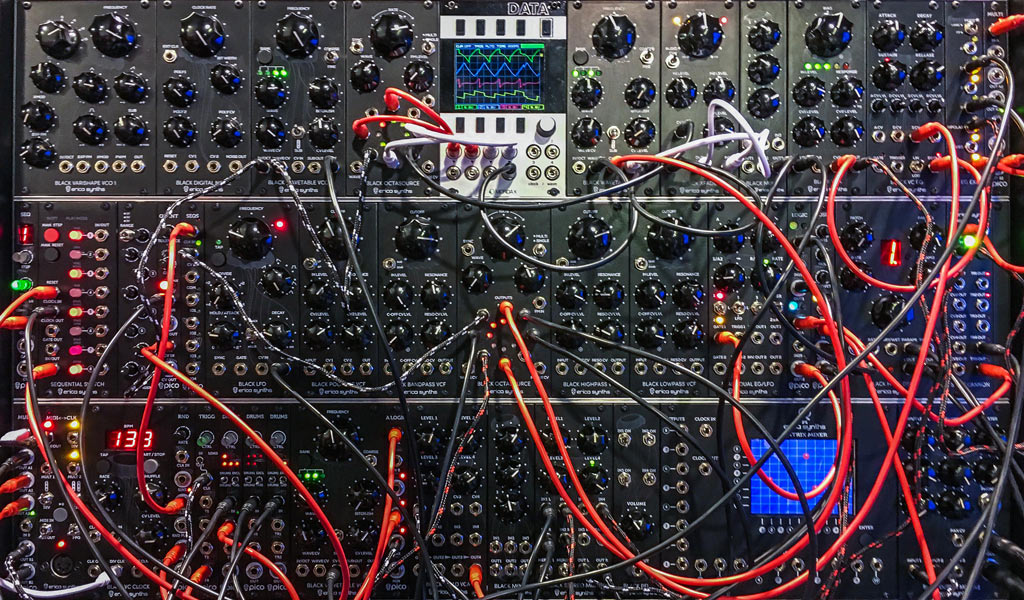
Welcome to Part 9 of 9 of Modular NAMM 2017. I’m going to wrap up this year’s marathon reports with a series of quick takes about what a number of other companies were showing this year, including 1010Music, Detachment 3, Division 6, Dreadbox, Erica Synths, Eventide, Koma, Moon, Roland, Synthrotek, and Waldorf.
In this installment, I get to share a trio of companies that take a slightly non-standard approach to their modules. Some of the sub-themes that emerged were multiple modules (twin or quad) behind one panel, and taking some interesting approaches to creating rhythms...