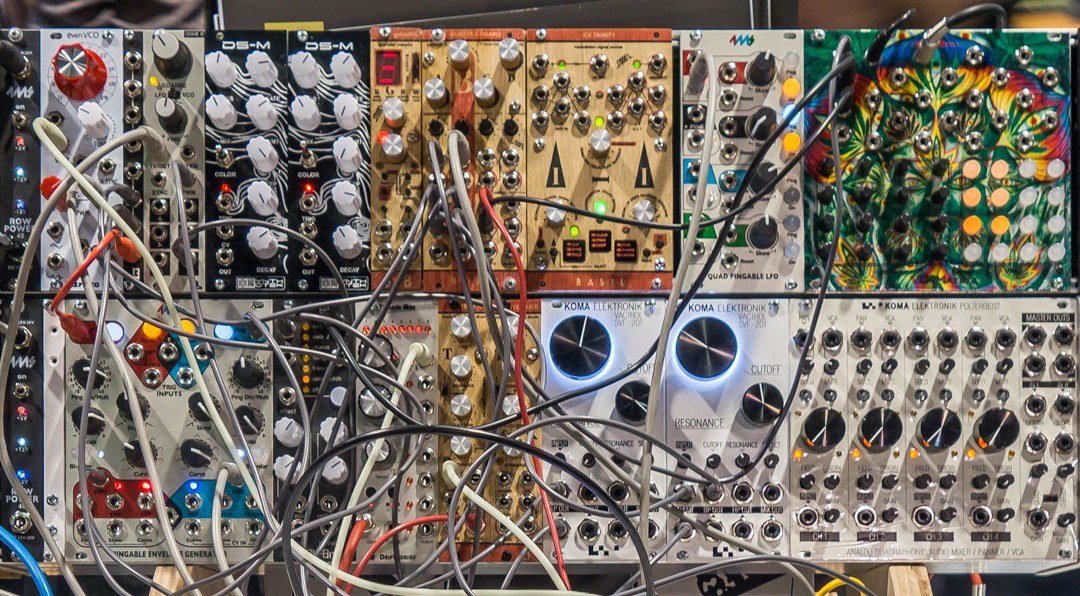
The 5U or “Moog Unit” (MU) modular format does not get much representation at NAMM, with Moog, Moon Modular and STG Soundlabs being the usual stalwarts. Moog skipped NAMM this year, but an unexpected source – Noise Engineering – stepped into the breech with three new 5U modules – as well as a few new Eurorack ones too, of course. I should also note that Buchla returned to the show floor, recently being bought by Foxtone Music – many have applauded this move as putting it in the hands of someone who truly cares about their history and synthesis in general, rather than just making a profit.
If there’s a theme to this installment, it’s promising modules we saw previewed last year (and that we thought were going to ship last year) getting refined and re-introduced this year. I’m not complaining; all benefitted from the additional thought and user feedback. It’s not like there’s an outcry that new modules aren’t being introduced fast enough…
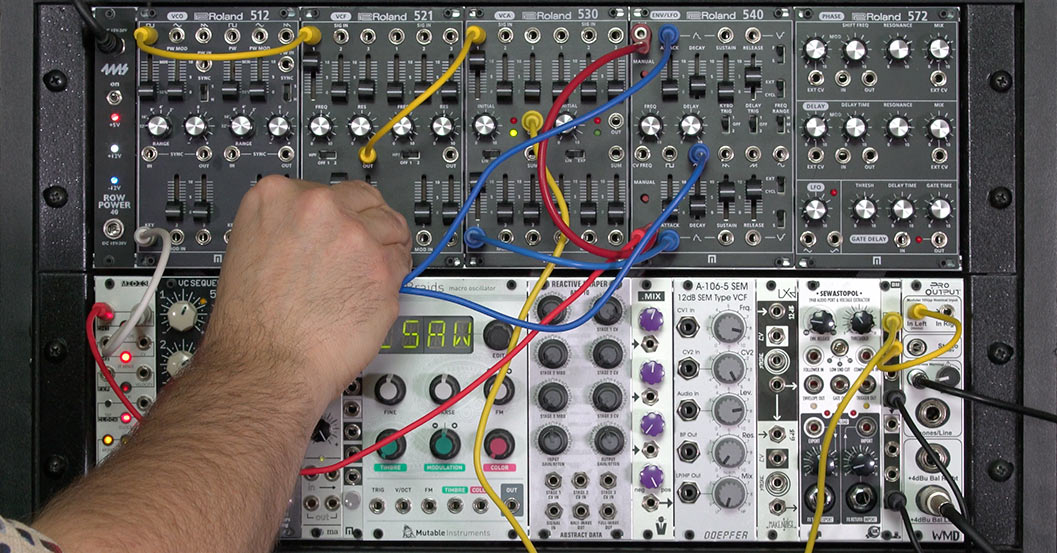
The thought process that went into building a compact yet comprehensive starting modular synth system for my Learn Modular Synthesis course that covered a wide range of both East and West Coast techniques.
I intended to visit the remaining modular manufacturers on my last half day at the show and cover all of their new releases, and fell woefully short – that’s a testament of how many manufacturers and new modules there are these days. Fortunately, there are others who report specs and prices; I’m going to focus more on my own impressions and reactions to some of the new and recently released modules I did get demos of.
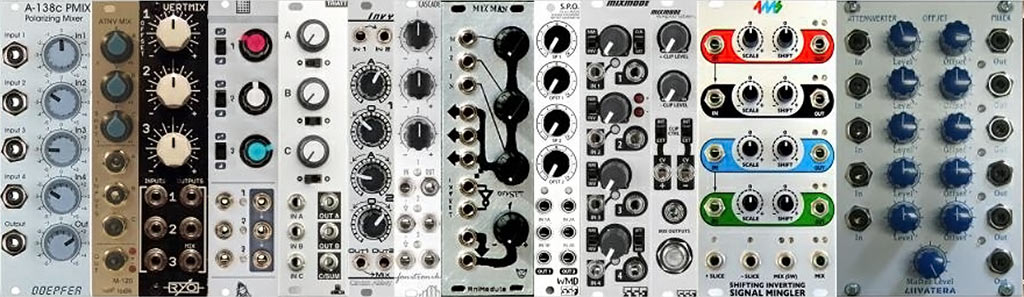
When you’re configuring your modular synthesizer, it’s easy to leave out the all-important utility modules that will help glue together a patch as well as open up creative options. In this note, we’re going to talk about what I call “utility mixers” – not the final mixer with optional effects sends and the such, but tools to combine signals in the middle of a patch.