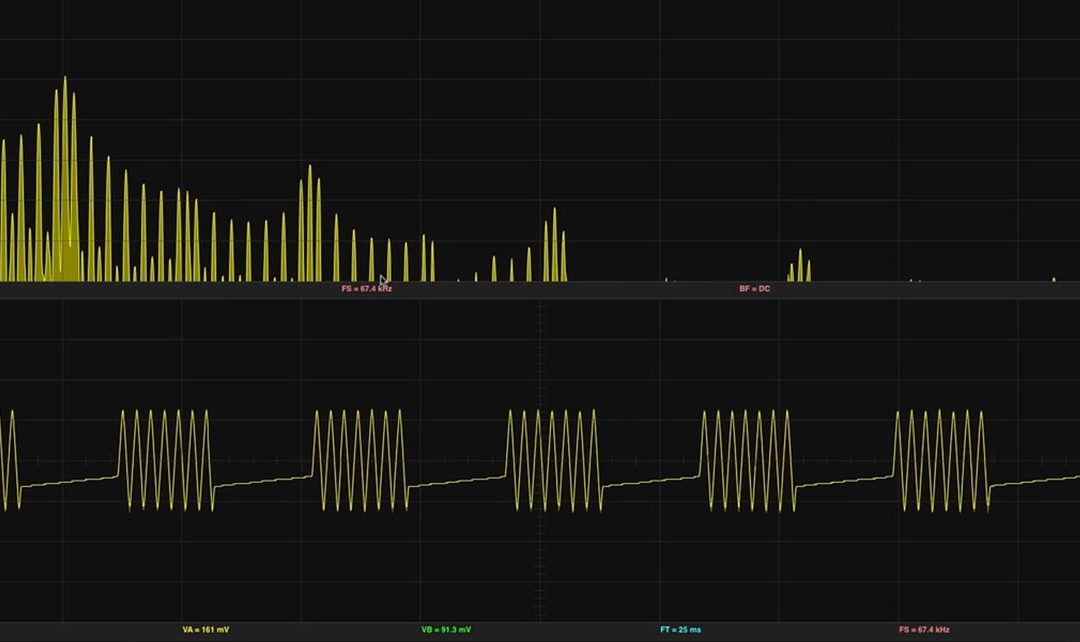
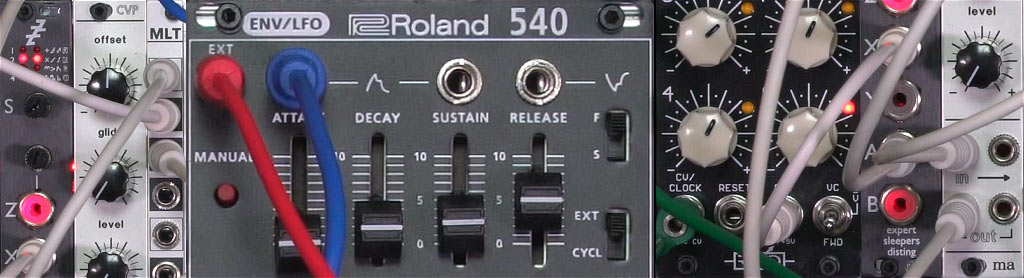
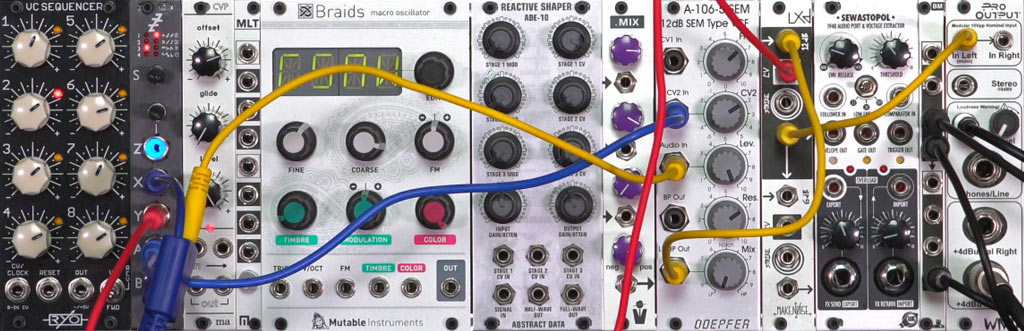
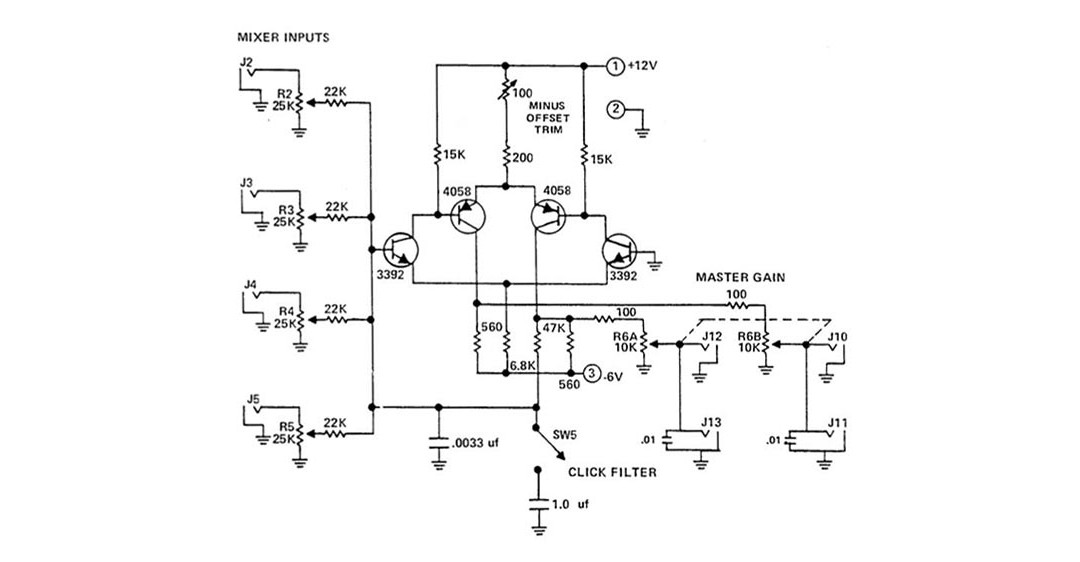
One way to create more complex waveforms (and therefore, harmonics) than traditionally supplied by oscillators is to use one oscillator to modulate the frequency of another. In this article I’ll describe how to set up an “FM” (frequency modulation) patch, and include a movie from my Learn Modular Synthesis course that demonstrates the “exponential” flavor of FM.
When you’re new to modular synthesizers, it’s all too easy to fall into the rut of just recreating the patches hardwired into your existing synths. But don’t forget that one of the main reasons to go modular in the first place is to get out of those ruts and explore...
I’ve fallen in love with the Make Noise LxD dual low pass gate (LPG), and wanted to share my love affair with you. The LxD contains two stages: a VCA coupled with a 12dB/octave, slightly resonant low pass filter based on their MMG (Multi Mode Gate), and a VCA coupled...
Several respected synthesists have spoken in hushed tones about how the Moog CP3 mixer is the “secret sauce” (when added in with the Moog oscillator, VCA, and A Certain Filter) that gives Moog modular systems their huge sound. As a result, some have cloned this...
I intended to visit the remaining modular manufacturers on my last half day at the show and cover all of their new releases, and fell woefully short – that’s a testament of how many manufacturers and new modules there are these days. Fortunately, there are others who report specs and prices; I’m going to focus more on my own impressions and reactions to some of the new and recently released modules I did get demos of.