For the last couple of year I’ve written up my conversations with all of the modular manufacturers I could visit during the most recent NAMM show, starting on the first night of the show. This year, for personal reasons, I was on a different schedule, but I’m finally starting my manufacturer-by-manufacturer reports, to be spread out over several installments.
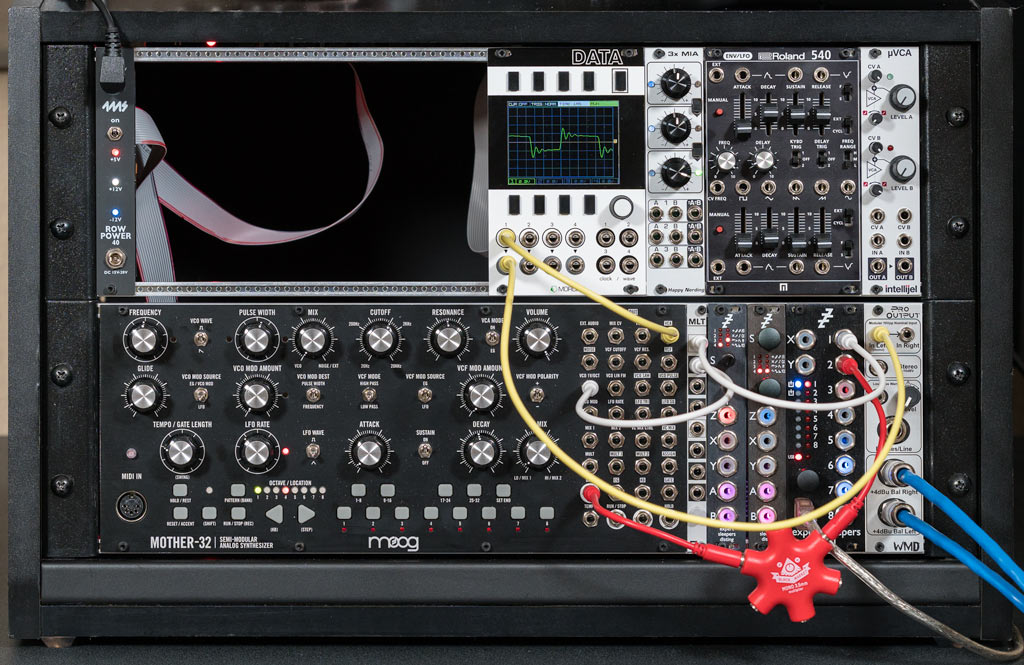
The next big “Learning Modular Synthesis” project is Eurorack Expansion. The idea behind it is that you already have a semi-modular synth or a small modular system, and now you’re wondering what to add next. As the saying goes, you need to walk before you can run. I’ve built up a core set of deceptively boring yet essential modules that will make it easier to interface your core system with the fun new modules you’re dying to try out.
After covering a few lesser-known (in the US) European modular companies in the previous installment, this time around I’m going to cover three of the better known US manufacturers. The themes running through this installment are live performance and sample manipulation.
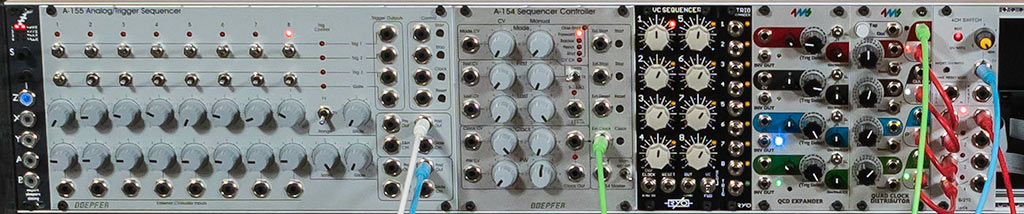
Ratcheting is a Berlin School sequencing technique where an individual note in a sequence has its envelopes retriggered multiple times, usually at a musical subdivision of the sequence’s tempo – such as playing 1/32 notes in the middle of an 1/8 note sequence – to create a roll. Although used since the 70s, not everyone knows how to create a ratcheting patch on their modular. In this article I demonstrate creating and performing several typical ratcheting patches.
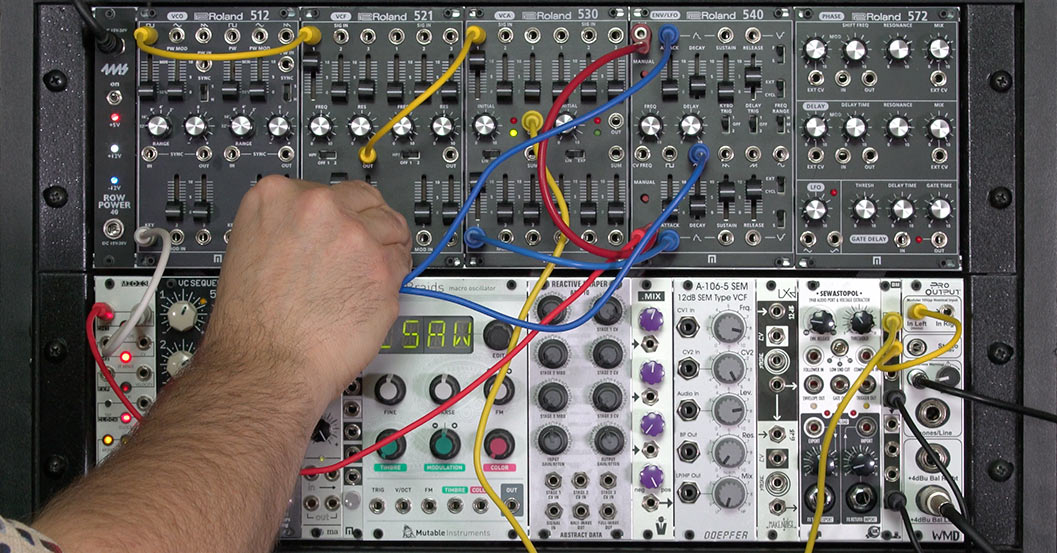
The thought process that went into building a compact yet comprehensive starting modular synth system for my Learn Modular Synthesis course that covered a wide range of both East and West Coast techniques.